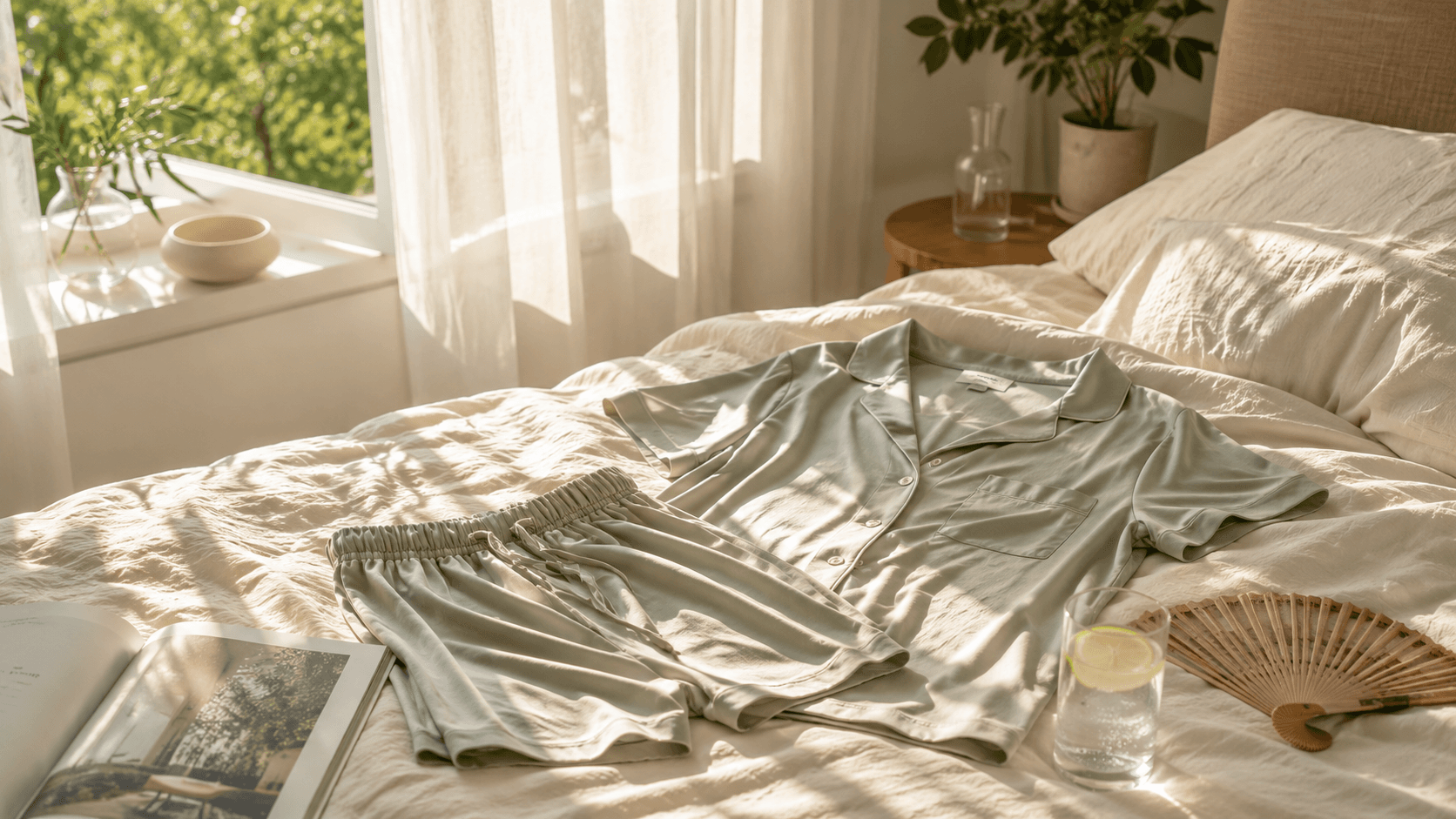
When it comes to sleepwear, fabric choice matters more than most people realise. The right material can help you sleep cooler, feel more comfortable and wake up less during the night. Two of the most popular options are viscose and cotton — and while both have their fans, they offer very different sleep experiences.
What is viscose?
Viscose (also called rayon) is a semi-synthetic fibre made from plant cellulose, usually wood pulp. It's processed to create a smooth, lightweight fabric that drapes beautifully against the body. Despite being man-made in its final form, viscose comes from natural raw materials, which gives it some of the best properties of natural fibres.
Viscose pyjamas are known for:
- Exceptional softness — the smooth fibre surface feels almost silky against skin
- Temperature regulation — viscose breathes well and doesn't trap heat
- Drape and flow — the fabric moves with the body rather than against it
- Lightweight feel — you barely notice you're wearing it
What is cotton?
Cotton is a natural fibre harvested from the cotton plant. It has been used in sleepwear for generations and remains a trusted, familiar choice. Cotton is durable, easy to wash and widely available in a range of weights and weaves.
Cotton pyjamas are known for:
- Durability — cotton holds up well to frequent washing
- Absorbing moisture — cotton soaks up sweat rather than wicking it away
- Familiarity — most people grew up wearing cotton and find it reassuring
- Ease of care — machine washable at higher temperatures
How they compare for sleep
Softness
Fresh viscose is generally softer than standard cotton. It has a smooth, fluid touch that many people find immediately comfortable. Cotton can feel soft too, especially high thread count varieties, but it tends to have more texture and can feel slightly rough against sensitive skin.
Winner: Viscose
Breathability
Both fabrics breathe, but in different ways. Viscose allows air to circulate through the fabric, helping body heat escape. Cotton is more absorbent — it soaks up moisture but can hold onto it, leaving the fabric damp against your skin if you sleep warm.
For women who run hot at night, or those experiencing menopause-related night sweats, viscose tends to feel more comfortable because it stays drier against the skin.
Winner: Viscose for warm sleepers; cotton for those who don't overheat
Temperature regulation
Viscose excels here. The lightweight structure allows heat to dissipate quickly, which is why it's a popular choice for warm weather or for anyone who wakes up feeling too hot. Cotton's heavier weaves can feel cosy in winter but stifling in summer.
Winner: Viscose
Care and durability
Cotton has the edge for longevity. It tolerates higher wash temperatures and is less prone to pilling over time. Viscose requires more care — cooler wash temperatures, gentle cycles and avoiding wringing — but if cared for properly it retains its softness well.
Winner: Cotton
Stretch and comfort of fit
Viscose often includes a small percentage of elastane or spandex to add gentle stretch. This means the fabric moves with you as you turn in your sleep, rather than pulling or bunching. Cotton jersey has natural stretch but woven cotton (used in classic pyjama sets) has very little give.
Winner: Viscose blends with elastane
Which should you choose?
If you prioritise softness and sleeping cool, viscose is the better choice. It feels luxurious, drapes well and keeps you comfortable on warmer nights.
If you prioritise durability and easy care, and you don't run particularly hot at night, cotton is a reliable and long-lasting option.
For many women — particularly those in their 30s, 40s and 50s who find their sleep comfort changing — viscose blends offer the best balance of softness, breathability and ease of wear.
At SoftConnection, all our pyjamas and loungewear are made from viscose blends, chosen specifically for their soft touch, breathability and relaxed drape. If you haven't tried viscose sleepwear before, it's worth trying.